
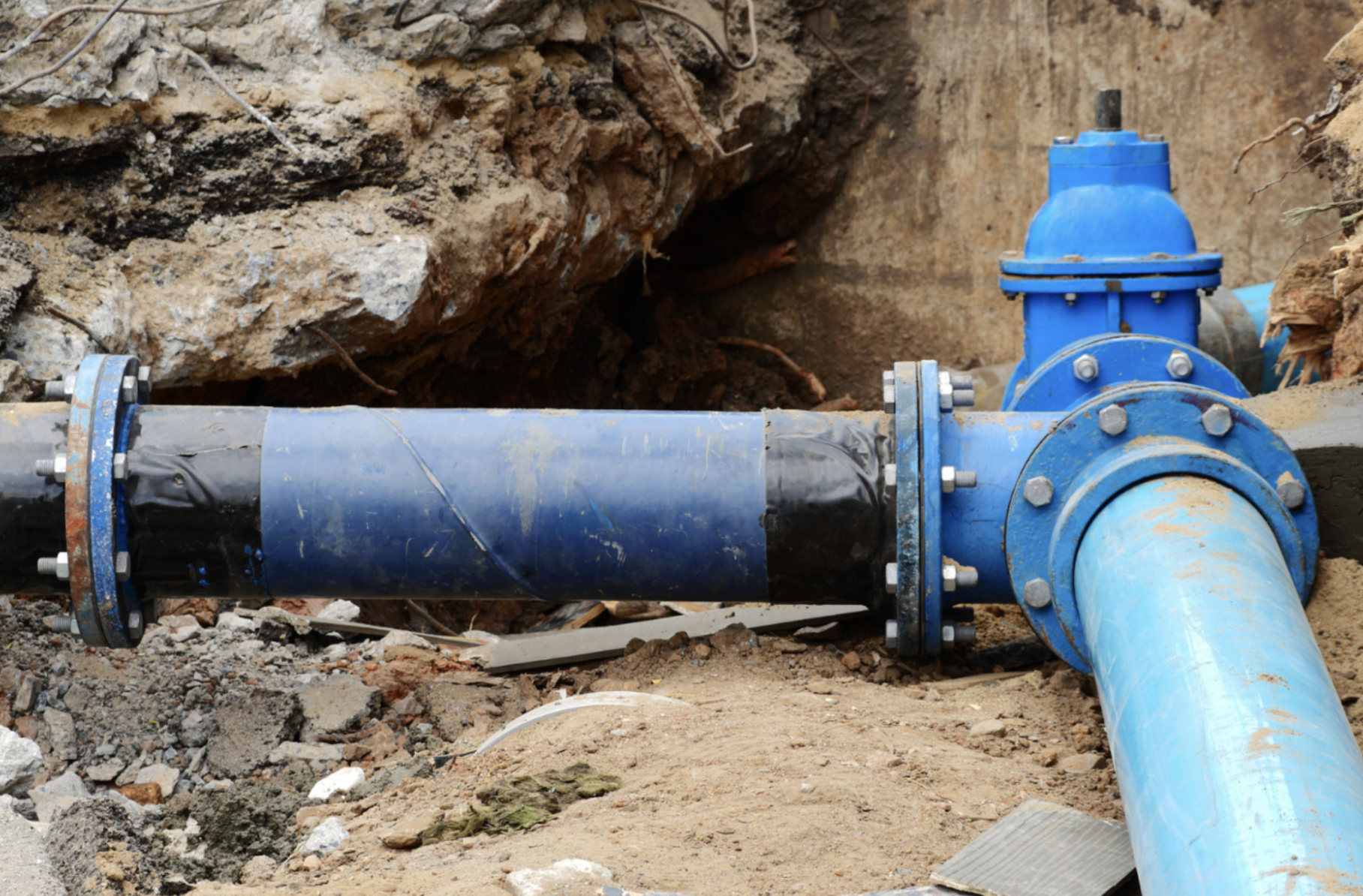
Aging pressure pipelines are one of the most pressing challenges facing municipalities today. From water transmission mains pushing hundreds of PSI to force mains moving wastewater across service areas, these systems are the backbone of every city, and most of them were built decades before today’s pipe rehabilitation technology existed.
When a pressure pipeline fails, it causes service interruptions, potential environmental liability, disrupted roadways, and serious public scrutiny. However, modern pressure pipeline rehabilitation has changed the calculus entirely. Cities no longer have to choose between living with a failing line and tearing up an entire corridor to fix it.
This guide walks city engineers and public works directors through what pressure pipeline rehabilitation is, when it applies, what methods are available, and how to vet the companies you bring in to do the work.
What Is Pressure Pipeline Rehabilitation?
Pressure pipeline rehabilitation refers to the process of restoring the structural integrity, leak resistance, and flow capacity of pressurized pipe systems without necessarily removing and replacing the original pipe. These systems operate under internal pressure, which distinguishes them from gravity sewer or storm drain systems and requires specialized rehabilitation methods rated for sustained operating pressure.
Typical pressure pipelines in a municipal context include:
- Potable water transmission mains
- Reclaimed water distribution lines
- Sewer force mains
- Raw water conveyance lines
- Industrial process pipelines
The American Society of Civil Engineers (ASCE) has consistently graded U.S. drinking water infrastructure a D in its Infrastructure Report Card, noting that much of the country’s buried pipe was installed between the 1940s and 1970s and is now well past its design life (ASCE, 2021). The EPA estimates that over one trillion dollars in water infrastructure investment will be needed over the next 20 years to maintain current service levels.
Rehabilitation, rather than full replacement, is increasingly the preferred path for municipalities seeking to extend infrastructure life while managing costs and community disruption.
When Does a Pressure Pipe Need Rehabilitation?
The most common mistake municipalities make is waiting for failure to trigger action. Emergency repairs on pressure pipelines are significantly more expensive than planned rehabilitation, and they carry operational and reputational risks that planned work avoids entirely.
Warning signs that a pressure pipeline is approaching end-of-life or requires intervention include:
Recurring Leaks and Breaks. A pipeline that has failed twice in five years is telling you something. Corrosion, joint deterioration, or material fatigue is progressing faster than point repairs can keep up with.
Tuberculation and Flow Loss. Cast iron and ductile iron pipes are prone to internal tuberculation — a buildup of iron oxide nodules that dramatically reduce hydraulic capacity. If you’re seeing reduced flows or increased pump energy costs without an obvious external cause, internal inspection is warranted.
Corrosion-Related Wall Loss. External soil conditions, stray electrical current, and internal chemistry can all cause wall thinning. A pipeline with significant wall loss may be structurally compromised even if it hasn’t yet leaked.
Age. Most asbestos cement (AC) pipe, unlined cast iron, and early ductile iron installations have a design life of 50–75 years. If your infrastructure map shows significant mileage from the 1950s through 1970s, it deserves a second look.
Failed Coatings or Lining. Pipelines originally lined with coal tar or cement mortar may experience lining degradation over time, exposing base material to corrosive flow conditions.
The right first step is always a thorough pipe assessment, including CCTV inspection, pressure testing, and condition scoring based on documented defect codes.
Rehabilitation Methods for Pressure Pipelines
Not all rehabilitation methods are created equal, and not all of them are appropriate for pressure applications. Here’s an overview of the methods used in modern pressure pipe rehabilitation:
Cured-In-Place Pipe (CIPP)
CIPP involves inverting or pulling a resin-saturated felt liner into the existing pipe, then curing it in place to form a structurally independent new pipe within the old one. It’s widely used for gravity sewer systems and has proven applications in low-to-moderate pressure water and sewer lines.
CIPP is appropriate for many pressure scenarios, but engineers should carefully verify the pressure rating of the specific liner system and installation method proposed. Not all CIPP applications are rated for high-pressure use.
Best for: Gravity sewers, low-pressure force mains, stormwater laterals
Spray-In-Place Pipe (SIPP)
SIPP uses a rotating spray head to apply a structural epoxy coating to the interior of the pipe. It’s particularly effective for corrosion rehabilitation of potable water mains, where the epoxy adheres directly to the pipe wall and restores a smooth, flow-efficient inner surface. SIPP materials used by certified contractors meet NSF/ANSI/CAN 61 certification requirements for contact with drinking water.
Best for: Potable water mains, corrosion protection, moderate pressure applications
Primus Line® High-Pressure Liner System
Primus Line® is a flexible liner system specifically engineered for high-pressure applications. Reinforced with seamlessly woven Kevlar® aramid fabric, it can handle operating pressures up to 1,189 PSI and burst pressures up to 2,988 PSI. The liner is pulled through the existing pipe, inflated to its round shape, and terminated with mechanical connectors that create a tension-resistant, fully pressure-rated flexible pipe within the host.
Primus Line’s key differentiators for municipal pressure applications include:
- NSF/ANSI/CAN 61 certification for potable water contact
- Capability to navigate bends up to 90 degrees
- Up to 8,200 feet per single pull
- No curing, heat, or chemical treatment required after installation
- 50+ year design life
- Removal and replacement possible if conditions change
Best for: Water transmission mains, high-pressure force mains, reclaimed water lines, gas and oil pipelines
Slip Lining
Slip lining involves pulling a smaller-diameter pipe inside the existing host pipe. It’s one of the oldest trenchless rehabilitation methods and remains viable for certain applications, though the resulting reduction in inside diameter can be significant and may require hydraulic modeling to confirm acceptability.
Best for: Large diameter pipelines where some flow reduction is acceptable, pipelines with significant structural degradation
Evaluating Pressure Pipe Rehabilitation Companies
Choosing the right contractor is as important as choosing the right method. Pressure pipeline rehabilitation involves specialized equipment, certified materials, and field crews who understand the consequences of improper installation under pressure.
Here’s what to look for when evaluating pressure pipe rehabilitation companies:
Demonstrated Pressure Experience. Ask for project references specifically involving pressure pipelines. Gravity sewer CIPP experience does not automatically translate to competency on a 150 PSI water transmission main. Review case studies that show operating pressures, pipe diameters, and project complexity.
Method-Specific Certifications. Proprietary liner systems like Primus Line® require manufacturer-certified installers. Confirm that any contractor working with NSF-certified materials is using properly certified products and application processes.
NASSCO Certification. The National Association of Sewer Service Companies (NASSCO) provides standardized pipeline condition assessment and rehabilitation training. Crews with NASSCO certification have a documented baseline of training in pipeline inspection protocols.
Inspection Capabilities. A contractor who can perform pre-rehabilitation camera inspection and condition assessment in-house is a stronger partner than one who subcontracts this work. Pre-rehab documentation is critical for QA/QC and regulatory compliance.
Warranty. Ask directly: what does the installation warranty cover, and for how long? Reputable pressure pipe rehabilitation contractors stand behind their work with meaningful warranty terms. Advantage Reline, for example, provides a 100% warranty on Primus Line® installations.
References from Comparable Agencies. A contractor who has completed rehabilitation work for peer municipalities — cities or water districts of similar scale and complexity — is a lower-risk selection than one without comparable public agency experience.
Project Planning: What City Engineers Need to Know
Pressure pipeline rehabilitation projects require more planning coordination than most public works teams anticipate on first engagement. Key planning considerations include:
Isolation and Bypass. Unlike gravity sewers, pressure pipelines usually cannot be rehabilitated while in service. You’ll need a bypass pumping and piping plan that maintains service during construction. For large-diameter transmission mains, this is a significant logistical undertaking.
Access Pit Requirements. Most trenchless methods require minimal access excavation — Primus Line® typically requires just two small access pits per rehabilitation section — but those pits still need to be coordinated with traffic control, utilities, and surface restoration plans.
Pressure Testing. Post-rehabilitation pressure testing is mandatory and should be specified in contract documents. Hydrostatic testing confirms liner integrity before the pipe is returned to service.
Disinfection for Potable Lines. Water mains returned to potable service require disinfection per AWWA C651 standards following rehabilitation. This step must be included in the project schedule and cost estimate.
Hydraulic Modeling. For slip lining or any method that reduces inside diameter, hydraulic modeling should confirm that the rehabilitated pipe will meet system demands before construction begins.
Regulatory Notifications. Many states require notification or permitting for pressure pipeline rehabilitation work affecting public water or wastewater systems. Confirm applicable requirements with your state primacy agency early in the planning process.
The Cost Case for Rehabilitation
Municipal budgets are always constrained. The pressure to defer capital expenditures is real. But the economics of proactive pressure pipeline rehabilitation are compelling.
The American Water Works Association (AWWA) has documented that the average cost to rehabilitate a water main using trenchless methods is typically 30–50% less than open-cut replacement when full project costs are considered, including pavement restoration, traffic control, landscape restoration, and service disruption costs.
For pressure pipelines in sensitive locations (under high-traffic roads, beneath buildings, in environmentally constrained corridors, or through established landscaping), the savings advantage of trenchless rehabilitation grows even larger, and in some cases excavation is simply not a viable option.
Beyond the direct project cost, consider the cost of failure. Emergency pressure pipeline repairs carry significant mobilization costs, often involve after-hours and weekend labor premiums, and may trigger environmental cleanup obligations if the failure affects soil or groundwater.
Planned rehabilitation on a city’s terms, when the system data says it’s time, is nearly always the better financial decision.
Before You Rehabilitate, Assess
The starting point for any municipal pressure pipeline rehabilitation program is accurate condition data. You cannot make defensible capital planning decisions without knowing what you have in the ground.
If your agency lacks recent condition assessment data on your pressure pipelines that’s the signal to act now.
Contact Advantage Reline to schedule a pipeline assessment or request a bid on your next pressure pipe rehabilitation project. With over 20 years of trenchless rehabilitation experience across municipal, water district, and industrial applications nationwide, our team delivers solutions that restore your infrastructure.