
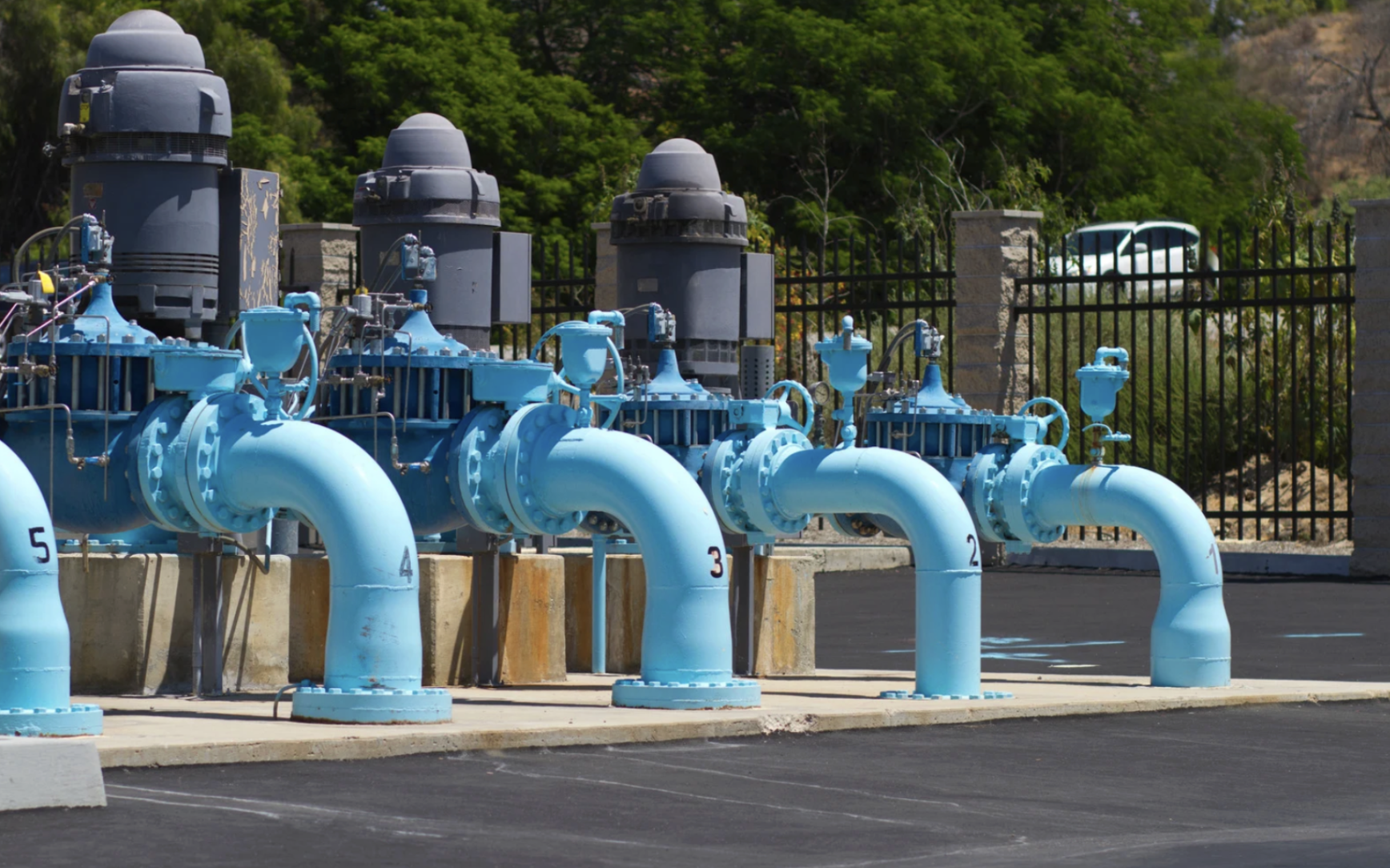
Water district managers responsible for aging transmission infrastructure face a narrowing set of options. Open-cut replacement is expensive, disruptive, and often not viable in constrained corridors. Conventional CIPP has pressure limitations. And doing nothing means managing the liability of a pipeline that’s operating on borrowed time.
Primus Line® has emerged as the preferred solution for an increasing number of water districts managing high-pressure transmission lines, reclaimed water mains, and aging distribution infrastructure. It’s not a new technology; it has been in service in Europe since the 1990s and in North American water infrastructure for well over a decade, but it remains less familiar to many district managers than it deserves to be.
This post explains what Primus Line® is, how it works, what it can and can’t do, and why districts from California’s coast to Arizona’s desert to Montana’s valleys are choosing it for their most challenging rehabilitation projects.
What Is Primus Line®?
Primus Line® is a flexible, high-pressure liner system designed specifically for the trenchless rehabilitation of pressurized pipelines. Developed by Rädlinger Primus Line GmbH, it is a purpose-engineered pressure pipe rehabilitation product, not an adaptation of a gravity sewer lining method.
The liner consists of three layers:
Inner liner: A smooth thermoplastic interior layer that provides the flow surface and serves as the media contact layer. For water applications, this layer is NSF/ANSI/CAN 61 certified, meaning it is independently tested and confirmed safe for contact with potable drinking water.
Reinforcement layer: Seamlessly woven Kevlar® aramid fiber provides the structural core of the liner. Kevlar® is the same material used in body armor and high-performance industrial applications — up to ten times stronger than steel by weight. This layer is what gives Primus Line® its exceptional pressure rating.
Outer layer: A protective exterior surface that interfaces with the host pipe.
The finished liner product is a flexible hose that can be coiled and transported on a reel, pulled through the existing pipe, and then inflated to its operating round shape. The termination system uses mechanical connectors (not adhesives or chemical bonding) that press the liner into a tension-resistant connection at each end.
The Pressure Ratings That Matter
For water district managers evaluating transmission line rehabilitation options, pressure performance is the threshold question. A liner that can’t meet your system’s operating pressure isn’t a solution.
Primus Line® specifications:
- Maximum operating pressure: 1,189 PSI (82 bar)
- Burst pressure: Up to 2,988 PSI (206 bar), with a minimum safety factor of 2.5x operating pressure
- Available for pipe diameters: Approximately 3 inches through 48 inches
These ratings cover the full range of municipal water transmission applications, including high-pressure transmission mains that conventional CIPP systems cannot address.
To put these numbers in context: a typical municipal water distribution system operates between 60 and 100 PSI. High-pressure transmission mains serving elevated service areas or long conveyance distances may operate at 150–300 PSI. Industrial and specialized water infrastructure can operate higher. Primus Line® handles all of these scenarios.
How Primus Installation Works
The installation process is one of the features that makes Primus Line® compelling for water districts managing infrastructure in constrained or sensitive locations. It requires minimal excavation and executes quickly.
Step 1: Access.
Two small access pits are excavated per rehabilitation section — one at the start, one at the end. These pits can typically utilize existing valve vault locations, service connections, or meter stations. For pipe at shallow depth, pits may be just a few feet wide.
Step 2: Pipe Inspection and Cleaning.
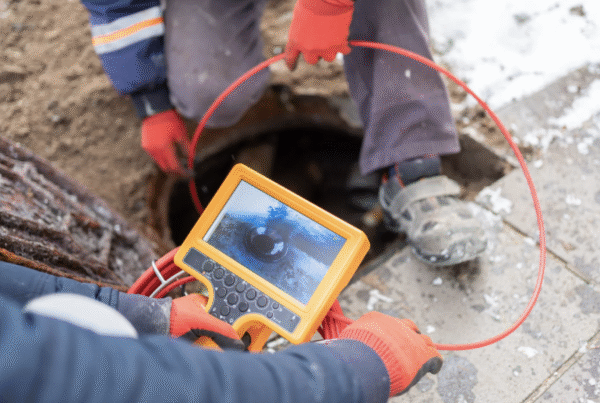
The host pipe is inspected via robotic CCTV camera and cleaned to prepare the surface for liner installation.
Step 3: Pipe Liner Insertion.
The liner, shipped in a coiled configuration, is fitted with a pulling head and drawn through the host pipe using a cable winch. A twist catcher prevents the liner from rotating during the pull. Pulls up to 8,200 feet (approximately 1.5 miles) per section are achievable.
Step 4: Liner Inflation.
The liner, which arrives in a folded U-shape secured with adhesive tape, is pressurized with air, causing it to expand to its round operating shape and make contact with the host pipe wall.
Step 5: Connector Installation.
Mechanical connectors are installed at each end, pressing the liner into a tension-resistant flanged or welded termination that integrates with the existing pipe system.
Step 6: Pressure Testing and Disinfection.
The rehabilitated section is hydrostatic pressure tested to confirm integrity. For potable water applications, the liner is disinfected per AWWA C651 standards before the line is returned to service.
Total installation time for a typical project section ranges from one to several days, depending on diameter and pull length.
What Makes Primus Line® Different from CIPP
Water district managers evaluating high-pressure pipe lining options will encounter both Primus Line® and CIPP. These are fundamentally different technologies, and the distinction matters.
Pressure performance. Conventional CIPP liners are rated for relatively limited pressure ranges. The structural capacity of a CIPP installation depends on the resin formulation, felt thickness, and curing process — and most standard systems are not engineered for the pressure levels that Primus Line® routinely handles. For transmission mains operating above approximately 150 PSI, Primus Line® is typically the appropriate choice.
No curing process. CIPP requires a curing phase (using steam, hot water, or UV light) that adds time to the installation and introduces quality control variables (cure temperature, cure uniformity, resin advancement). Primus Line® has no curing step. After the liner is pulled, inflated, and connected, it is operationally complete.
Reversibility. Because Primus Line® is not bonded or fused to the host pipe, it can theoretically be removed and replaced if the host pipe is eventually abandoned and replaced, or if system conditions change. CIPP is essentially permanent once installed.
Navigating bends. Primus Line® can be installed through bends up to 90 degrees, a significant capability in systems where the pipeline alignment includes direction changes. The Advantage Reline team has rehabilitated a 3,600-foot water main with several 45-degree bends using Primus Line®.
Ground movement tolerance. The flexible nature of the liner provides inherent tolerance for thermal expansion of the host pipe and limited ground movement, a meaningful attribute in seismically active regions.
Certifications and Standards
For water district managers responsible for infrastructure delivering drinking water to the public, certification documentation is non-negotiable.
NSF/ANSI/CAN 61. The Primus Line® inner liner material meets NSF/ANSI/CAN 61 certification for contact with potable drinking water. This is the primary drinking water contact material certification required by most state primacy agencies for any liner system used in potable water pipelines.
AWWA Standards. Post-installation disinfection for potable water applications is performed per AWWA C651 (Disinfecting Water Mains), ensuring the rehabilitated section meets public health requirements before returning to service.
Design Standards. Primus Line® installations are engineered to relevant ASTM and ISO standards for liner performance, with minimum safety factors documented in the product specifications.
Is Primus Line® Right for Your System?
Primus Line® is the right choice when the following conditions apply:
- The pipeline is a pressurized system (water transmission, reclaimed water, force main, or gas and oil)
- Operating pressure exceeds the rating of conventional CIPP systems, or where CIPP is otherwise unsuitable
- The corridor is constrained by surface features, environmental sensitivity, or right-of-way limitations that make excavation impractical
- Speed of installation is a priority to minimize bypass duration or service disruption
- The pipeline includes bends that make slip lining impractical
- Potable water contact certification is required
Primus Line® may not be the optimal choice when significant diameter increase is needed (it works within the existing pipe), when the pipe has collapsed or is completely structurally failed, or when the application is a gravity sewer with no pressure requirement (where CIPP or SIPP may be more cost-effective).
A condition assessment and consultation with an experienced installer is the right way to confirm suitability for your specific infrastructure.
Why Choose Advantage Reline for Primus Line® Installation
Primus Line® is a proprietary system that requires manufacturer-certified installers. Not every trenchless contractor is qualified to install it correctly, and the pressure performance that makes it valuable depends entirely on proper installation: particularly connector installation, which requires specialized tooling and trained crews.
Advantage Reline is a certified Primus Line® installer with over 20 years of trenchless rehabilitation experience. Our crews have installed Primus Line® in projects ranging from small municipal service area water mains to high-pressure transmission lines serving major water districts. We provide a 100% installation warranty on our Primus Line® work and deliver complete project documentation including post-installation pressure test records and disinfection certification for potable water applications.
Our team can support your project from initial assessment through installation and project closeout. Providing a single point of accountability for projects where performance and documentation requirements are high.
Ready to Evaluate Primus Line® for Your Infrastructure?
If your district is managing aging transmission infrastructure, recurring leaks on pressure mains, or pipelines in locations where excavation is constrained, Primus Line® deserves a serious evaluation.
Contact Advantage Reline to discuss your specific project, review applicable specifications, and get a bid on what transmission line rehabilitation using Primus Line® would look like for your system.