Project Case Study
Primus Medium Pressure
Media
Potable Water
Pressure (psi)
283
Length (ft)
3,400
Diameter (in)
14
Pits
3
Bends (deg)
45 and 22
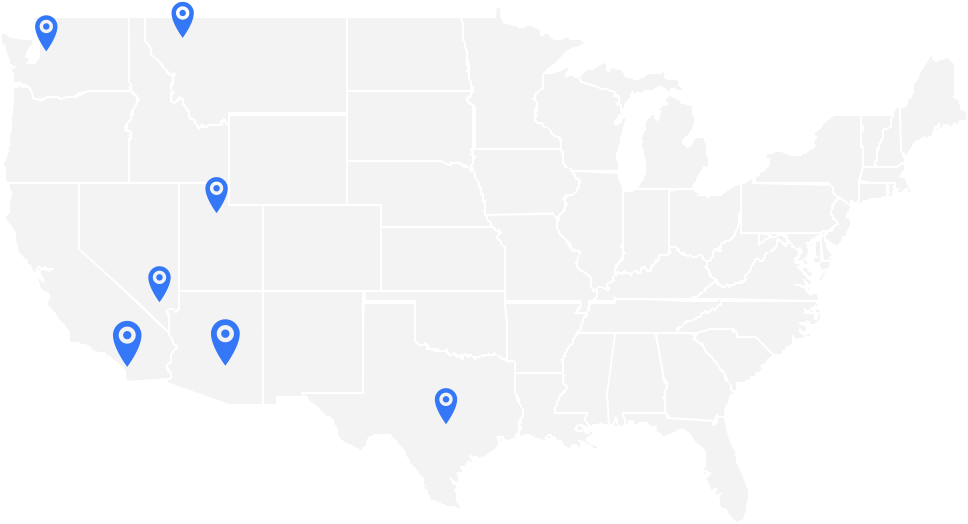
California
Client Objective
Restore a deteriorating potable water transmission main on a steep California hillside without disturbing endangered butterfly habitat or triggering costly environmental mitigation.
Overview
Advantage Reline delivered a complex 3,400-foot pipeline rehabilitation through protected environmental terrain, overcoming a 650-foot elevation gain, multiple directional changes, and medium-pressure system requirements. The trenchless solution preserved critical endangered species habitat while restoring reliable water service through one of the region's most challenging topographical and regulatory environments.
Challenges
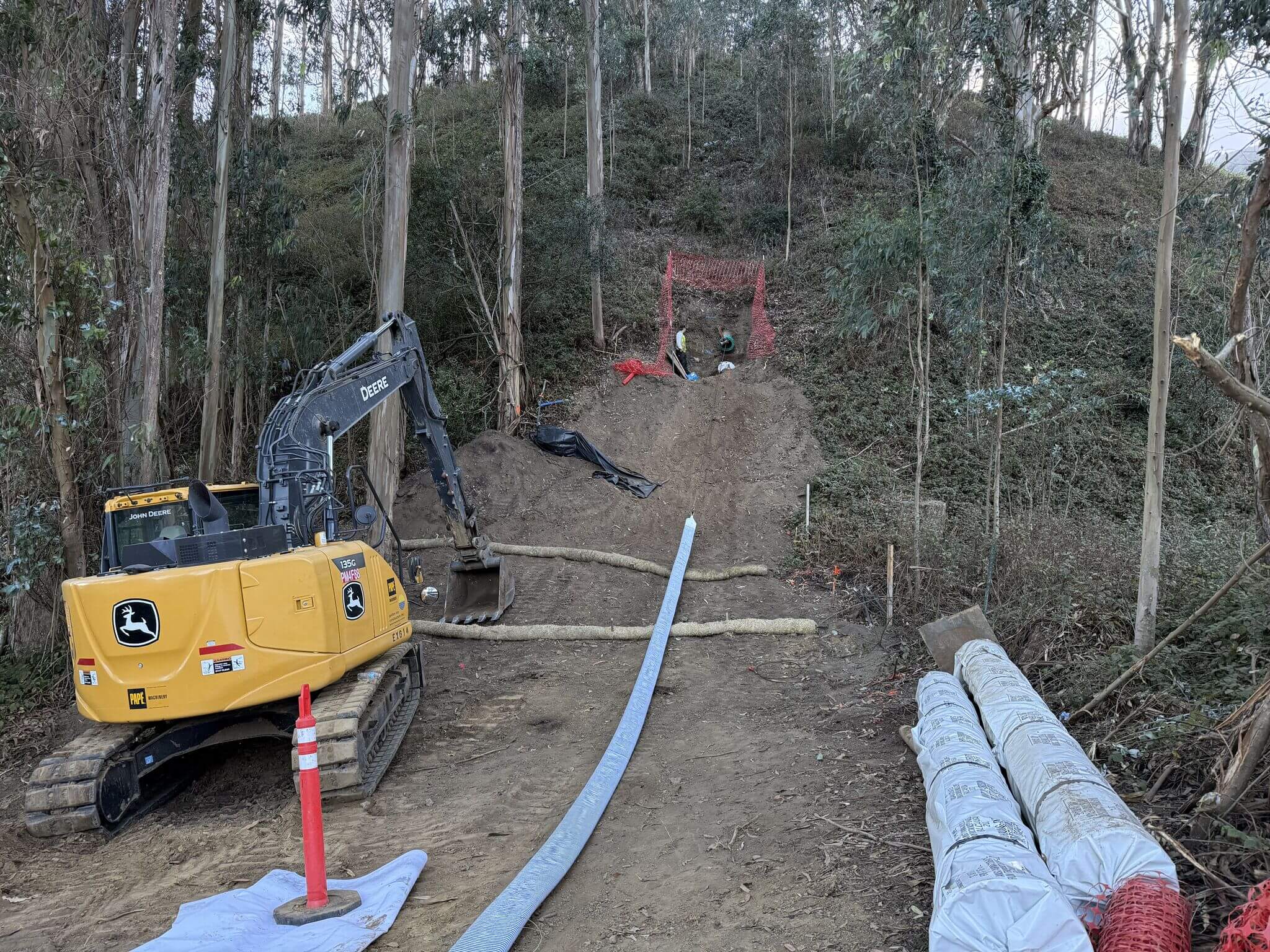
The failing water main connected elevated storage tanks to the distribution system via steep hillside terrain designated as protected habitat for endangered butterflies. Traditional replacement would have required extensive excavation across the hillside, destroying habitat and triggering months of environmental review, permits, and mitigation—potentially costing hundreds of thousands in additional expenses and years of delays.
The pipeline's configuration added technical complexity: 22° and 45° bends (both vertical and horizontal), medium-pressure fittings, and a continuous 650-foot elevation climb. Access was restricted to narrow service roads, and large areas were completely off-limits to equipment and personnel. The client needed a solution that could navigate this geometry while maintaining pressure ratings and avoiding any environmental impact.
Solution
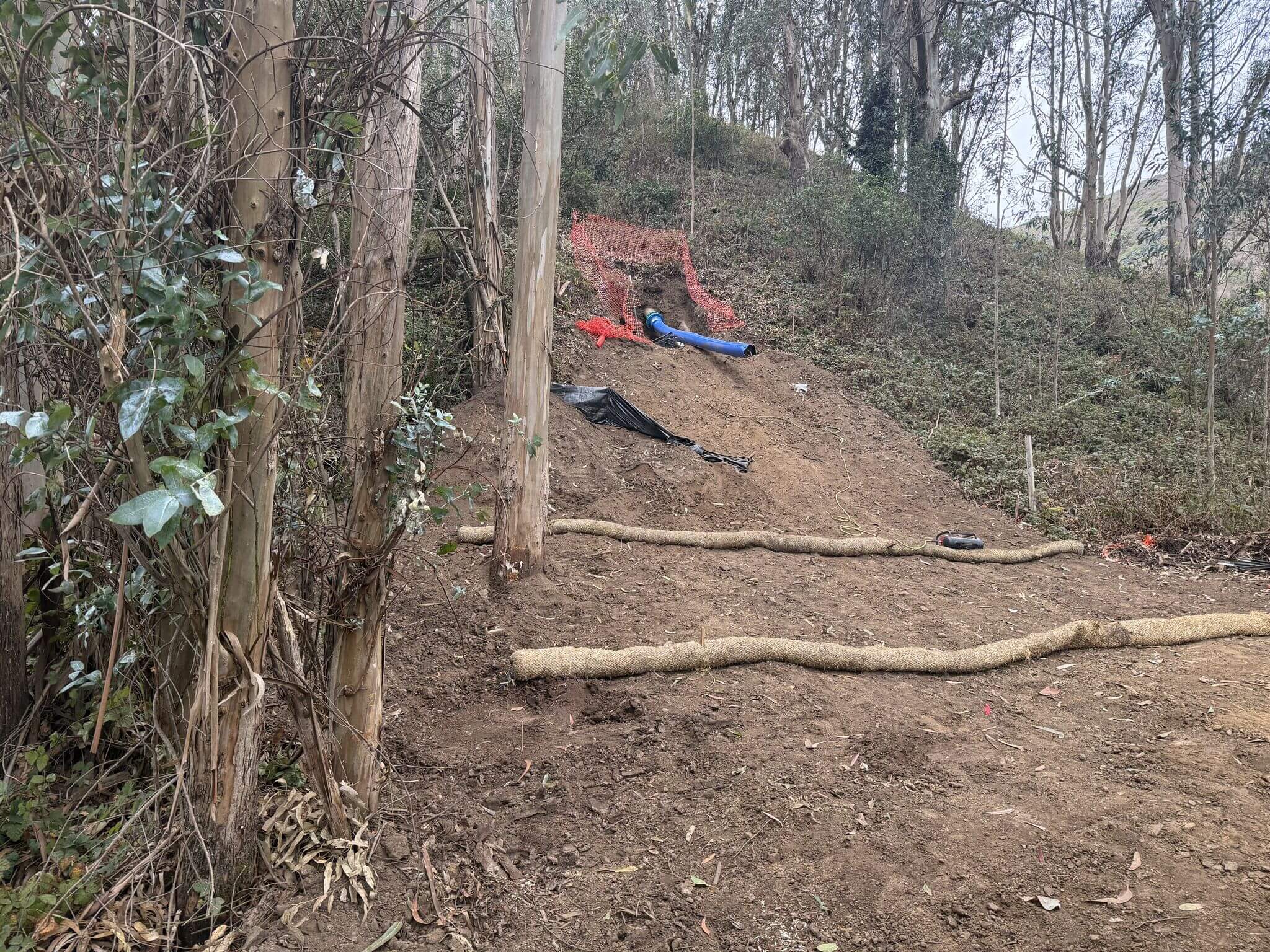
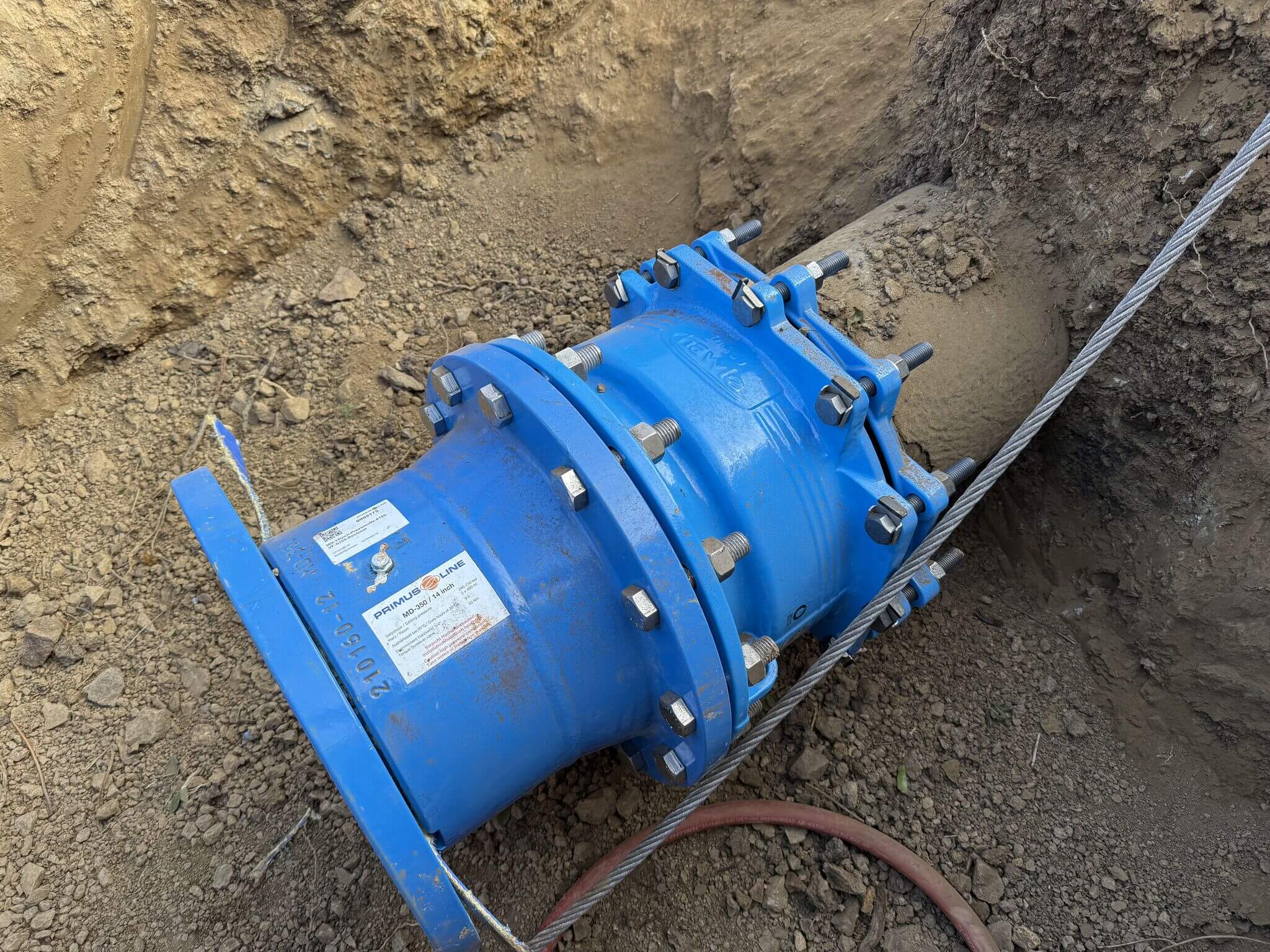
Advantage Reline utilized Primus Line® trenchless rehabilitation technology, installing 3,400 feet of structural liner through three minimal-access pits strategically positioned along existing service roads. The jointless lining system successfully navigated all vertical and horizontal bends while maintaining medium-pressure specifications throughout the elevation gain.
By limiting ground disturbance to three small pit locations, the project avoided environmental permits, habitat mitigation requirements, and regulatory delays that would have accompanied traditional methods. The crew worked exclusively within approved access corridors, with zero encroachment into butterfly habitat zones—maintaining full compliance with state and federal endangered species protections.
The client received a fully restored, structurally sound pipeline at a fraction of the cost, timeline, and environmental impact of conventional replacement methods.